Friday, May 8, 2015

Module 15: The Adventures of Captain Underpants-The First Epic Novel

Book Cover Image:
http://img1.imagesbn.com/p/9780545499088_p0_v1_s260x420.JPG
Book Summary:
The first installment of the Captain Underpants series. George and Harold are elementary school friends who like to have fun and joke around at school. Principal Krupp dislikes the two because of their pranks, and he shows them a video with incriminating evidence. The two friends order a hypnotizing ring, and they soon hypnotize Mr. Krupp and convince him to become Captain Underpants for real. They also switch the video with a kid video of songs about purple dragons. Mr. Krupp becomes Captain Underpants and captures two bank robbers, and then foils the sinister plan of Dr. Diaper. George and Harold then pour water on his head to unhypnotize him; however, this only makes him snap back and forth between his new alter ego.

APA Reference of Book:
Pilkey, D. (1997). The adventures of Captain Underpants: The first epic novel. New York, NY: Scholastic. 

Impressions:
I enjoyed reading this book and seeing how the series began. The two characters of Harold and George are funny and likeable, but in a twisted kind of way. I can see how some parents may object to the series because of the bad examples they set with their pranks, but I feel that we need to look beyond this and accept these characters as having redeemable qualities. Good triumphs over evil in the end in spite of the faults of the two protagonists.

Professional Review:

Gr 2-4--Pilkey plays with words and pictures, providing great entertainment. The story is immediately engaging--two fourth-grade boys who write comic books and who love to pull pranks find themselves in big trouble. Mean Mr. Krupp, their principal, videotapes George and Harold setting up their stunts and threatens to expose them. The boys' luck changes when they send for a 3-D Hypno-Ring and hypnotize Krupp, turning him into Captain Underpants, their own superhero creation. Later, Pilkey includes several pages of flip-o-ramas that animate the action. The simple black-and-white illustrations on every page furnish comic-strip appeal. The cover features Captain Underpants resplendent in white briefs, on top of a tall building. This book will fly off the shelves.


Hopf, M. M. (1997, December 1). [Review of the book The aventures of Captain Underpants: The first epic novel, by Dav Pilkey]. School Library Journal, 43(12), 99. Retrieved from www.slj.com.

Library Use:
A lesson can be designed to introduce students to humorous stories with a discussion of differences of traditional superheroes with those of Captain Underpants.

Monday, May 4, 2015

Module 14: This is Just to Say: Poems of apology and forgiveness

Book Cover Image:
http://i3.bookpage.com/books/images/171da1270a45aa58ed298e7916ace508/medium.jpg
Book Summary:
A collection of poems aimed at elementary level students. The first half of the book includes poems of apology written from the perspective of a student. The second half of the book are the responses to the apologies written as poems.


APA Reference of Book:
Sidman, J., & Zagarenski, P. (2007). This is just to say: Poems of apology and forgiveness. Boston, MA: Houghton Mifflin.

Impressions:
I liked the concept of having poems of apology together with the responses. They are light hearted and enjoyable to read, and they make a good collection to introduce young children to poetry.

Professional Review:
Gr 4-7 --Mrs. Merz assigns her sixth-grade students to write poems of apology, and what emerges is a surprising array of emotions, poetic forms, and subjects from dead pets and biting hamsters to angry siblings and betrayal of trust. The children decide to create their own book of these poems, complete with an introduction and occasional notes by editor Anthony K. Fast-talking Thomas writes a humorous poem patterned after William Carlos Williams's "This Is Just to Say," apologizing to Mrs. Garcia in the office, for stealing the jelly donuts in the teachers' lounge: "Forgive me/they were delicious/so sweet/and so gloppy." Mrs. Garcia's response poem says, "Of course I forgive you./But I still have to call your mother." A more serious concern emerges in "Next Time," written by Jewel: "Please, please come back./Don't leave me spinning alone,/like a slow, sad tornado./I'm sorry, Daddy./Next time I'll be/perfect." In the response poem, Jewel describes her father's wrenching reply telling her that, "None of the stupid things/I have ever done/are even close to being your fault." Sidman's ear is keen, capturing many voices. Her skill as a poet accessible to young people is unmatched. Zagarenski's delicately outlined collage drawings and paintings are created on mixed backgrounds-notebook paper, paper bags, newspaper, graph paper, school supplies. This is an important book both for its creativity and for its wisdom.


Bock, L. (2007, May 1). [Review of the book This is just to say: Poems of apology and forgiveness, by Joyce Sidman]. School Library Journal, 53(5), 162. Retrieved from www.slj.com.

Library Use:
A poetry lesson could be done using this book to introduce young elementary students to poetry. Afterwards as an activity the students can write their own poem of apology and then have a discussion at the end of the lesson. 

Tuesday, April 28, 2015

Module 13: Amulet. Book One: The Stonekeeper

Book Cover Image:
http://images.indiebound.com/813/846/9780439846813.jpg
Book Summary:
After a tragic car accident ends the life of Emily's father. She along with her brother and mother are left alone, and they relocate to a small town to start anew. There she finds an amulet capable a much power left by her great grandfather. Her great grandfather was a mysterious man who had suddenly vanished many years prior. She is told that it is capable of power and that it could be used to return things back to the way they used to be. Emily is then taken to a mysterious world when a creature takes her mom away. She tries to rescue her mother, but in the process finds her great grandfather who then tells her many secrets about the amulet. Her mother is captured by a strange creature and it is up to Emily to rescue her with the help of her brother and the other robots built by her great grandfather. An adversary tries to obtain the amulet from Emily

APA Reference of Book
Kibuishi, K. (2008). Amulet: The stonekeeper. New York, NY: Scholastic.

Impressions:
It's a story that somewhat resembles The Hobbit or Lord of the Rings. The only difference is that instead of a ring there is an amulet with a piece of stone, and whoever controls it has power. It's an exciting story that includes a mystery surrounding the family's great grandfather. An eccentric man who was a great inventor. Emily is the great grand daughter who inherits the amulet and it's power, and it's up to her to save the family. She loses her father in a tragic accident early on in the book and later on in the book it is implied that with the amulet's power things can be changed back to the way they were. In other words bring back her father. It's an exciting story to follow with many nice color illustrations. 

Professional Review:
Gr 4 Up --Hurrying to pick up her brother, Emily and her parents have a tragic accident, and her father dies. After this dark beginning, the story skips forward two years to when the remaining family members are forced to move to an ancestral house in a small town. Rumored to be haunted, it is unkempt and forbidding. The first night there, Emily's mother goes down to the basement to investigate a noise and doesn't return. The kids search for her and discover a doorway into another world, where their mother has been swallowed by a monster and is being taken away. An amulet that Emily found in the house tells her that together they can save her, but her brother isn't so sure that this voice can be trusted. Still, what other choice do they have in this strange place? Gorgeous illustrations with great color bring light to this gloomy tale. Filled with excitement, monsters, robots, and mysteries, this fantasy adventure will appeal to many readers, but it does have some truly nightmarish elements.

Rutherford, D. (2008, January 1). [Review of the book The Stonekeeper, by Kazu Kibuishi]. School Library Journal, 54(1), 152. Retrieved from www.slj.com. 

Library Use:
This graphic novel can be used in a lesson of compare and contrast in an ELA class. Students can compare similarities and differences with other novels such as Lord of the Rings of The Wizard of Oz. 

Wednesday, April 15, 2015

Module 12: The Many Rides of Paul Revere

Book Cover Image:
http://www.greenleafpress.com/catalog/images/0439572908.jpg
Book Summary:
The book begins with a brief history of Paul Revere's father. His father was of French background and his name was Apollos Rivoire. His family made its way to the American colonies where Apollos apprenticed as a silversmith. He changed the family name to something easier to pronounce, and it became Revere. His son Paul apprenticed under him and soon Paul was a talented silversmith as well. The book follows Paul Revere's involvement in the American Revolution and his important role of a messenger. He later led an artillery unit and was accused of cowardice and bad military leadership. He was eventually exonerated of these charges and he went on to become a hero of the American Revolution.

APA Reference of Book:
Giblin, J. (2007). The many rides of Paul Revere. New York, NY: Scholastic Press.

Impressions:
I really enjoyed reading this biography of Paul Revere. It was interesting without being overwhelming. It contained many interesting facts about him and also some lesser know facts that I didn't know about. I would recommend this book highly to history teachers and English teachers because it not only contains a great biography, but also much more such as the Longfellow poem about Paul Revere. It also contains many great illustrations and photos of artifacts from that era of American history.

Professional Review:
Gr 4-7 --Most people know that Revere was a silversmith, brave patriot, and famed rider for the Revolution, but the author reveals his many other talents, including those as a bell ringer, businessman, cartoonist, print engraver, and even dentist. Giblin captures readers' interest from the beginning: "If things had been different, his name wouldn't have been Paul Revere. It might have been Apollos Rivoire…." He further engages children with interesting details that help create a true feeling for the time period and a deeper understanding of events. The clear writing makes the information accessible for a wide audience. The book is illustrated with numerous reproductions of archival photographs, maps, engravings, and documents that bring the history to life. A section on Henry Wadsworth Longfellow and the text of his famous poem, "Paul Revere's Ride," is included. This impressive, attractive addition to Giblin's award-winning work makes for enjoyable reading in its own right and is invaluable as a resource for researchers. A fascinating account of this multifaceted leader.

Phillips, C. (2007, November 1). [Review of the book The many rides of Paul Revere, by James Giblin]. School Library Journal, 53(11), 146. Retrieved from www.slj.com.

Library Use:
Would make a great history lesson that incorporates the poetry of Henry Wadsworth Longfellow's "Paul Revere's Ride." A great way to teach across the curriculum between social studies and language arts.

Monday, April 13, 2015

Module 11: Moonshot - The Flight of Apollo 11

Book Cover Image:
http://mediamacaroni.com/wp-content/uploads/2010/11/moonshot.jpg
Book Summary:
The story of Apollo 11's mission to the moon told in a narrative story format. It starts with the astronauts suiting up and follows them on their journey to the moon. It describes their trip and their landing on the moon, and their return trip back to earth.

APA Reference of Book:
Floca, B. (2009). Moonshot: the flight of Apollo 11. New York, NY: Atheneum.

Impressions:
This is a book written for elementary aged students, and it tells the story of the first moon landing in simple language. I was more impressed with the art illustrations that were done in watercolor than anything else. I have always had an interest in the Apollo lunar missions, and this book tells it story like fashion that appeals to the younger readers.

Professional Review:
Gr 2-5 --Large in trim size as well as topic, this stirring account retraces Apollo 11's historic mission in brief but precise detail, and also brilliantly captures the mighty scope and drama of the achievement. Rendered in delicate lines and subtly modulated watercolors, the eye-filling illustrations allow viewers to follow the three astronauts as they lumber aboard their spacecraft for the blastoff and ensuing weeklong journey ("...there's no fresh air outside the window;/after a week this small home will not smell so good./This is not why anyone/wants to be an astronaut"). They split up so that two can make their famous sortie, and then reunite for the return to "the good and lonely Earth,/glowing in the sky." Floca enhances his brief, poetic main text with an opening spread that illustrates each component of Apollo 11, and a lucid closing summary of the entire Apollo program that, among other enlightening facts, includes a comment from Neil Armstrong about what he said versus what he meant to say when he stepped onto the lunar surface. Consider this commemoration of the first Moon landing's 40th anniversary as a spectacular alternative for younger readers to Catherine Thimmesh's Team Moon (Houghton, 2006).

Peters, J. (2009, March 1). [Review of the book Moonshot: the flight of Apollo 11, by Brian Floca]. School Library Journal, 55(3), 134. Retrieved from www.slj.com.

Library Use:
This book can be used to introduce elementary age students to the first Apollo moon landing. It can be incorporated into either a history lesson or a science lesson.. 

Wednesday, April 8, 2015

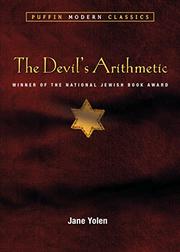
Module 10: The Devil's Arithmetic

Book Cover:
https://d3myrwj42s63no.cloudfront.net/180/014/240/109/9/0142401099.jpg
Book Summary:
Hannah Stern visits her grand parents, and during the Passover Seder she is transported back to war time Europe to one of the concentration camps for Jews. While there she becomes Chaya and she experiences first hand what it was like to be a Jew in camp. She sees people die and suffer and she learns to appreciate the past suffering her ancestors went through. Just as she is going to die in the gas chamber in place of Rivka she returns to modern day New Rochelle, New York. She later finds out that Rivka was actually her Aunt Eva. Many survivors changed their names after the war and tried to forget, but it was impossible to forget.

APA Reference of Book:
Yolen, J. (1988). The devil's arithmetic. New York, NY: Viking Kestral.

Impressions:
I really liked the story because it had a lot to offer. It was mainly a lesson on the Holocaust, but it also appealed to me because it was almost like a Twilight Zone episode. It had just enough of a sci-fi twist to draw me in especially with the time travel and characters becoming two people. Writing about the Holocaust is difficult and Jane Yolen made it possible to read about the horror involved without overwhelming the reader who may be a novice in regards to the Holocaust.

Professional Review:
From School Library Journal
Grade 4-8 In this novel, Yolen attempts to answer those who question why the Holocaust should be remembered. Hannah, 12, is tired of remembering, and is embarrassed by her grandfather, who rants and raves at the mention of the Nazis. Her mother's explanations of how her grandparents and great-aunt lost all family and friends during that time have little effect. Then, during a Passover Seder, Hannah is chosen to open the door to welcome the prophet Elijah. As she does so, she is transported to a village in Poland in the 1940s, where everyone thinks that she is Chaya, who has just recovered from a serious illness. She is captured by the Nazis and taken to a death camp, where she is befriended by a young girl named Rivka, who teaches her how to fight the dehumanizing processes of the camp and hold onto her identity. When at last their luck runs out and Rivka is chosen, Hannah/Chaya, in an almost impulsive act of self-sacrifice, goes in her stead. As the door to the gas chamber closes behind her, she is returned to the door of her grandparents' apartment, waiting for Elijah. Through Hannah, with her memories of the present and the past, Yolen does a fine job of illustrating the importance of remembering. She adds much to children's understanding of the effects of the Holocaust, which will reverberate throughout history, today and tomorrow. Susan M. Harding, Mesquite Public Library, Tex.

Harding, S. M. (1988, November 1). [Review of the book The devil's arithmetic, by Jane Yolen]. School Library Journal, 35(3), 114. Retrieved from www.slj.com.

Library Use:
This work would make a good introduction to the subject of the Holocaust for middle school students.

Tuesday, March 31, 2015

Module 9: Cam Jansen and the Mystery of the Stolen Diamonds

Book Cover Image:
http://ecx.images-amazon.com/images/I/51aNoxLv%2BpL._SY344_BO1,204,203,200_.jpg

Book Summary:
Cam Jansen and her friend Eric are at the mall when a jewelry store is robbed. Diamonds are stolen and Cam sees a mysterious man running away from the crime scene. There is also a curious couple with a baby. With the help of her friend Eric, Cam eventually breaks the case by following the large mysterious man to their hideout. Cam sends Eric for the police, and they arrive just in time to arrest the thieves. The couple with the fake baby and the mysterious man were working together as a team. The big man was a diversion while the fake couple stole the diamonds.

APA Reference of Book:
Adler, D. A. (1980). Cam Jansen and the mystery of the stolen diamonds. New York, NY: Puffin Books.

Impressions:
This is the first Cam Jansen book published and it is an enjoyable mystery for young readers. Cam gets her nickname for her amazing memory and this is what helps her solve the mystery of the stolen diamonds. Its a simple mystery that does not overwhelm the reader. It makes for a good introduction to mysteries for young readers.

Professional Review:
Gr 2-4 - Jennifer Jansen, better known as “The Camera” or “Cam,” is a fifth grader with a photographic memory. Cam  and her friend Eric are in a shopping mall when a jewelry store is robbed.  Cam makes a mental note of people running our of the store, among them a man with a mustache and a couple carrying a baby.  The police catch the man but have to let him go.  On a hunch Cam and Eric follow the man to an abandoned house where Cam finds out he is in cahoots with the couple.  (The baby is really a doll and the diamonds were hidden in a rattle.)  Although Cam is captured by the thieves, she manages to escape as the police arrive and take charge.  David A. Adler has come up with a neat plot that gives Cam’s resourcefulness plenty of chance to shine. – David Stevenson, School Library Journal

Stevenson, D. (1980, May 1). [Review of the book Cam Jansen and the mystery of the stolen diamonds, by David A. Adler]. School Library Journal, 26(9), 84. Retrieved from www.slj.com.

Library Use:
This would be a good book to read for story time and introduce children to mysteries.